Table of contents
Everyone has returned from a “must-see” city with the same photos, the same crowded viewpoints, and the same nagging feeling: the best moments happened by accident. In 2026, overtourism, timed-entry tickets, and algorithm-driven itineraries are making travel more predictable, yet experienced travelers are quietly moving the other way, toward hyper-local knowledge that can’t be scraped from a map. Their bet is simple: when you have limited time, a local guide can turn a destination from a checklist into a story, and surface places you’d otherwise walk past.
Google won’t get you behind the door
How many “secret spots” are actually secret anymore? The internet is awash in lists, reels, and SEO-packed roundups, yet much of that content points to the same high-traffic addresses because they are easy to verify, easy to photograph, and already popular enough to rank. The result is a feedback loop: the more a place is cited, the more it is visited, and the more it is cited again. Industry data has repeatedly shown how concentrated visitor flows can become; across major destinations, a small cluster of headline attractions absorbs a disproportionate share of footfall, while surrounding neighborhoods stay off most itineraries. Travelers feel that imbalance on the ground, in queues that eat up half a day and in restaurants where the menu seems designed for the camera, not for locals.
Seasoned travelers respond with a different question: what’s missing from the feed? A local guide’s advantage is not just knowing an address, but knowing the context, the timing, and the social rules that make a place accessible. That can mean arriving at a fish market when the auction energy peaks rather than when tour buses do, choosing a temple approach that avoids bottlenecks, or understanding which small galleries welcome visitors quietly and which prefer appointments. It is also about the “soft infrastructure” that rarely appears online, such as whether a family-run eatery closes unexpectedly for deliveries, or whether a scenic stairway becomes uncomfortably crowded after a specific ferry arrival. Those details sound minor until they save your day, and they are typically transmitted person-to-person, not posted for mass consumption.
There is also a trust issue. Many “hidden gem” posts are effectively advertisements, and even well-meaning creators can recycle outdated information. A local guide is accountable in a way a search result is not; if a viewpoint is fenced off, if a café has changed hands, if a neighborhood festival has shifted dates, the guide hears about it first and adjusts. For travelers who measure a trip in moments rather than landmarks, that real-time accuracy is not a luxury, it is the difference between a detour and a discovery.
Time is the rarest travel currency
Waste a morning, and you feel it. Travel looks abundant on a calendar, yet most people arrive with narrow windows, a couple of free days around work, or an itinerary constrained by flight times and hotel check-in rules. That is why experienced travelers often treat guidance as a time-management tool, not an indulgence. When you already know the “big hits,” the real value lies in sequencing: what to do first, what to skip, and what to pair together so you’re not zigzagging across a city on overloaded transit lines. In destinations where attractions now require reservations, timed tickets, or early entry, the cost of a bad plan can be brutal, and you may spend peak hours in line while the best light and the best energy disappear elsewhere.
Local guides compress complexity. They know which waterfront promenade is best at sunrise because the wind shifts later, and they know which street food stalls ramp up after office workers finish their shifts. They can also read the day in front of you: weather that threatens a hike, swell conditions that change a coastal walk, or local events that quietly reroute traffic. If you are traveling with older relatives, children, or anyone with mobility limits, that adaptive planning becomes even more valuable because “just explore” can quickly turn into exhaustion. The best guides work like editors, cutting the filler and keeping the scenes that matter, and they do it while you’re already on the move.
Budget is part of the calculation too. It sounds counterintuitive, but paying for expertise can reduce total spend when it prevents expensive mistakes, such as taxis taken out of frustration, meals at inflated tourist traps, or last-minute ticket markups. Travelers who have been burned once by a fully booked museum or a closed hiking trail tend to become converts, not because they want to be led, but because they want to protect the finite resource that travel always consumes: time. Even when you love wandering, having a locally informed backbone to your day can make the wandering richer, and it can free you to linger where you actually want to linger.
Local guides decode culture, not just maps
Awkward misunderstandings happen fast. A destination can be safe and welcoming, yet still full of unspoken rules about where to queue, how to order, when to speak quietly, and how to behave at religious sites or memorials. Seasoned travelers know that cultural fluency is not automatic, and that the stakes are higher than embarrassment. In crowded cities, small missteps can trigger friction; in sacred spaces, they can be disrespectful. A local guide does more than translate words, they translate expectations, and that translation often opens doors, literally and figuratively.
Consider food, the arena where “authentic” is most overused and most misunderstood. Travelers can find top-rated restaurants easily, but ratings don’t tell you how to order like a local, which dishes are seasonal, or what “spicy” really means in that region. A guide can explain why a certain stew is eaten at a specific time of year, why a neighborhood specializes in one style of noodles, or why a particular stall becomes a social hub after a sports match. Those stories are not trivia; they are the threads that make a meal memorable. They also help you travel more respectfully, because you start to see people’s routines rather than treating them as a backdrop.
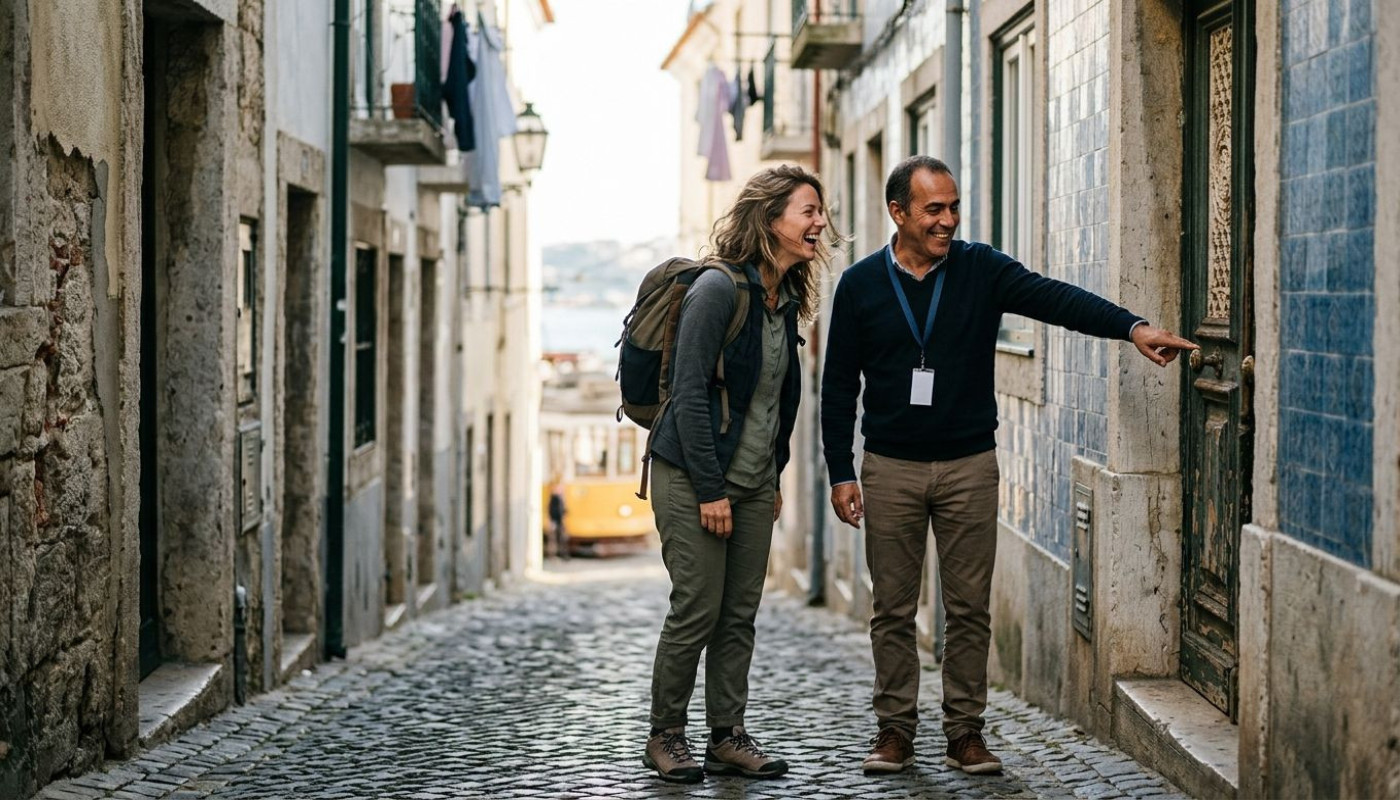
In many places, especially in parts of Asia, Europe, and Latin America, relationships still shape access. A guide who is known in a neighborhood can introduce you to a craft workshop, a family-run café, or a small performance where visitors are welcome but mass tourism is not. This is not about “exclusive” experiences for their own sake, it is about scale and consent: some communities can accommodate curious travelers, but not sudden waves prompted by viral posts. When a local guide steers you to an under-visited area, they can do so with an awareness of what that area can handle, and they can brief you on how to behave so you’re not the outsider who disrupts the rhythm.
Hidden gems thrive on local trust
Want the real place? Then don’t trample it. The phrase “hidden gem” carries a contradiction: the moment it is broadcast, it is at risk of being spoiled. Experienced travelers have learned that the healthiest discoveries often come through local trust networks rather than mass exposure, and that a good guide treats sensitive places carefully. They may rotate stops, avoid fragile sites during peak times, or keep certain micro-locations off public itineraries because preservation matters. That restraint is not gatekeeping, it is stewardship, and it is increasingly important as destinations grapple with crowding, noise complaints, and environmental stress.
The trust element also changes the quality of interaction. When a guide has long-standing relationships with vendors, artisans, or community groups, travelers are not just “customers passing through,” they are guests, and that shift can be felt immediately. Conversations become warmer, samples appear on the table, a shop owner explains a technique in more depth, and you learn what to look for so you can avoid low-quality souvenirs. Those benefits aren’t guaranteed, and no ethical guide will promise special treatment, yet the reality of human connection is that familiarity lowers barriers. In practical terms, it can mean getting to a viewpoint via a safer path, finding a quieter beach access point, or understanding why a seemingly empty alley becomes lively after dusk.
Busan is a good example of a city where this approach pays off. It has major draws that are easy to find, yet its most compelling moments often sit in the seams: markets that shift mood by the hour, hillside neighborhoods where the best views are not on the postcard route, and coastal corners that require local timing to enjoy without crowds. Travelers looking to explore those layers often turn to locally run operators that know the city beyond the headline stops; for those planning a visit, https://www.busan-trip.com/ is one starting point used by visitors who want structured local insight without losing the freedom to roam.
Planning notes before you book
Choose dates early, and confirm what’s included. Set a budget for guiding, transport, and meals, then ask about peak-time surcharges and cancellation terms. Check whether any discounts apply, including youth, senior, or multi-day rates, and look for local tourism passes or city programs that can reduce entry fees so your money goes into experiences, not queues.
Similar

Planning Your Trip: Do Spontaneous City Walks Enhance Your Experience?
Why Travelers Regret Skipping Pre-trip Activity Research

From Beginners To Pros: How Tailored Formulas Shape Surf Experiences